Wednesday, April 20, 2011

Mohammad Hafeez as Caption of Pakistan Cricket Team in Future


Mohammad Hafeez as Caption of Pakistan  Cricket Team in Future

Mohammad Hafeez approved on with his remarkable World Cup form as he led Pakistan to a 68-run win over University of West Indies Vice-chancellor’s XI

It seems that Hafeez may lead Pakistan Team in Future. The all-rounder (born October 17, 1980 in Sargodha) is a right-handed batsman and a right-arm offbreak bowler. He usually opens the batting and is also good boundary fielder.

Hafeez Profile:

Hafeez Videos:

Monday, April 18, 2011

Nokia Handset Models for 2011 – Nokia Phones List


 Nokia Handset Models for 2011 – Nokia Phones List


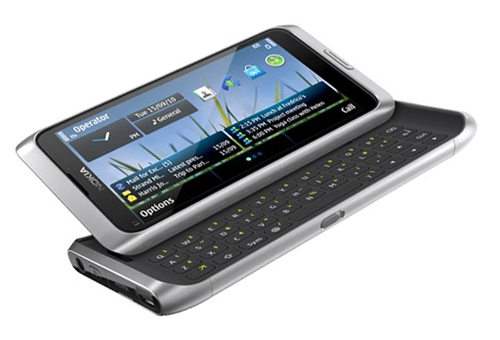
Nokia E7-00
First in our list is the Nokia E7-00 or simply the Nokia E7. It runs under the Symbian^3 OS. This qwerty model smartphone can cater the needs of business type of persons. It poses versatility, as it is a slider and candy bar in form factor both.
Nokia E7-00 phone


The E7 weighs about 176 grams and has dimensions of (123.7) x (62.4) x (13.6) mm. its capacitive touch screen is 4-inch diagonally. For the cameras, it has 8 Megapixel with dual LED flash with Face recognition capability and a secondary camera perfect for video calls. It supports GPRS/EDGE class B, HSDPA Cat9 and WLAN IEEE 802.11 b/g/n for data connectivity.

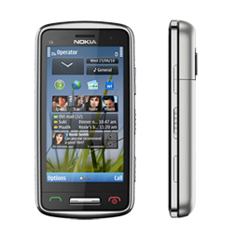
Nokia C6-01
The Nokia C6-01 is another Symbian^3 powered smartphone in the list.
Also, it boasts its capacitive touch screen, which is a 3.2-inch diagonally with (640) × (360)-pixel nHD resolution.
Nokia-C6-01 Phone
It is interestingly elegant in silver gray and in black model. Available colors though may vary per region or country. It can connect on network through EGPRS, UMTS, WLAN, WCDMA/HSDPA and EGSM.

Nokia C5-03
The C5-03 of Nokia is another great choice for 2011. This Symbian OS 9.4 powered phone is a good for budget solution.
It has 3.2-inch resistive touch screen with Nokia Dynamic Intelligent Layouts and proximity sensor. It is a candy bar in form with dimensions of (105.8) x (51) x (13.8) mm and weighs pretty light at 93 grams.
Nokia C5-03 Phone
For data connectivity, the Nokia C5 03 supports HSDPA, A-GPS, Bluetooth 2.0, WLAN (802.11 b/g), and MicroUSB 2.0. Its sole camera is standard 5.0 Megapixel unit.

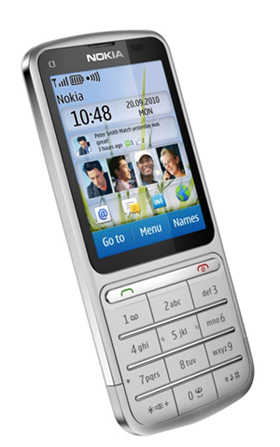
Nokia C3 Touch and Type
Next is the Nokia C3 Touch and Type. As the model name implies, the main attraction of this Nokia phone is its touch and type feature, which means it comes with a touch screen and has the 12 regular keys but not the navigation keys.
This phone runs under Series 40 6th Edition OS. It is candy bar in form with dimensions of (111) x (47.5) x (11) mm and has weight of 100 grams.
Nokia C3 Touch and Type Phone
The C3 Touch and Type has GSM EDGE, UMTS and WLAN for data connectivity. Additionally, it is built with 5 Megapixel digital camera with flash.

Nokia to release over 40 models for 2011, world gasps

Nokia to release over 40 models for 2011, world gasps 

It seems that Nokia have gone back onto the offensive, and decided they would release over 40 phones for the remainer of the year (2011). The further ramifications mean that as eagerly anticipated, there won’t be a Windows-powered model until at least next year. And as we know, a year is a colossal time in mobile phone times.
Quite why the Finnish giant is taking this type of stance is beyond me, as this kind of tinkering is what led them down this road in the first place. By peppering the market with handsets, most of which are not distinguishable enough from each other, their goal is to presumably increase brand awareness and even flood some segments. I’d rather they just concentrated on a few handsets, like the C7:


Here’s why I think it’s a crappy idea.
1) Diluted product development: Nokia should be saving their cash to fund extra developments, rather than spreading themselves thin. I would prefer it if they concentrated their energies into primary, flagship handsets, as they did in the past.
2) Problematic market focus: One of the problems with releasing so many handsets is that it’s difficult to show to Joe Public how these handsets are different. Fine for those in the industry, but to the average consumer, a Nokia 5230 versus a Nokia 5530 is just not going to appear any different. Result: confusion.
3) Not addressing the real issues: Sorry Nokia, this isn’t addressing any of the real issues behind why you’ve fallen behind, and just releasing handsets in the hope that something will stick is just not going to work. At best, it’s a shot in the dark. Think about what consumers want; do they want a company that releases fewer, great handsets, or one that releases many average ones?
4) No creation of customer loyalty: One of Apple’s major strengths is that they’ve created massive customer loyalty in their products, which is pretty similar to how Nokia had it in the early 2000′s, with one handset becoming almost standard across market segments. It’s hard to see Apple actually having the same success if they had released 40 different models of phone. Customers are clannish, and more handsets means smaller clans. If there ever is to be a revolt (of words) against Apples, unification is necessary and we’ve seen that we some Blackberry models.
Come on Nokia, creation of a ‘classic’ phone is not just down to the technical ability of the handset itself, but rather to the marketing behind it. I see it as a bit of an arrogant ‘we’re still the best’ gesture, when in fact they should be swallowing their pride and playing catchup. Didn’t they say they wanted to go back to basics? I can’t see it here, but I’ll be happy to revise my comments on seeing some actual handsets.

Best Email Clients

Five Best Email Clients

Here are the five most popular clients :

Outlook (Windows, $399 for Office Standard Suite)


Outlook has been around since the 1990s, and by virtue of being part of the Microsoft Office suite and having been entrenched in the business environment, it enjoys an enormous popularity. Even if many people use Outlook because it's the email client provided—and often required!—by their place of employment, that doesn't mean it can't stand on its own merits. Integration with Windows Desktop Search gives you the ability to quickly search through your entire Outlook workflow, and Outlook can handle everything from your email to your calendar and easily transfer tasks, contacts, and more between the two.

Apple Mail (Mac, Free)


Apple's Mail application, also known as Mail.app or simply Mail, unsurprisingly continues the tradition of Apple applications following the "it just works" method of design. Mail allows you to collect all your email from across the web and various email servers in one place, and it actively engages your email as you read it. For example, if you get an email with an invitation to a meeting next Thursday, Mail will detect it and make it simple to kick that appointment right over to iCal. Like the integration between Windows Desktop Search and Outlook, Mail is integrated with Spotlight to make deep massaging your messages easy.

Thunderbird (Windows/Mac/Linux, Free)

Thunderbird is an open-source offering from Mozilla—the company behind the beloved open-source browser Firefox. Thunderbird is a solid email application that sports the same extensibility of its code-sibling Firefox. Many readers voted for not just Thunderbird but Thunderbird with the addition of Lightning, a Thunderbird extension that adds scheduling and task management functionality to Thunderbird. If you're interested in using Thunderbird you'll definitely want to check out our guide to making Thunderbird your ultimate online/offline messaging hub, and you may also want to consider packing Thunderbird Portable away on your thumb drive for anywhere-access to your email.


Gmail (Web-based, Free)


Google has had quite a hit on their hands with Gmail, their extremely popular web-based email client. Not only do you get a feature-packed email account when you sign up for Gmail—you also get an email client that's is very adept at pulling in email from other services and organizing it with a robust system of filters and tags. You can check out how to manage multiple inboxes here if you'd like to use Gmail as a central hub for managing all your email. Many of the features in Gmail aren't necessarily revolutionary—like the ability to filter messages, flag, or label them—but the features are implemented in such a way that makes them effortless to use. And, surprising as it may seem, its much-loved threaded conversations are still relatively unique to Gmail.

Postbox (Windows/Mac, $39.95)


Postbox is stand-alone email client for Windows and Mac operating systems. Postbox is based on Mozilla-code, so the Postbox team has been able to tweak quite a few Thunderbird extensions, including Lightning, to work with Postbox. In addition to its extensibility, Postbox's default interface is powerful. The app includes features like the ability to search and compose simultaneously. You can look up an email address, search for a previous attachment, and check an old email for information all in the sidebar while working on your current email. Postbox also provides email summaries as you read through and search your email, showing you not just the sender and subject line but the attachments and any important information inside the email like addresses, appointments, and URLs.


Emerging trade flows herald new world order

Emerging trade flows herald new world order

Burgeoning trade flows to, from and within Asia-Pacific are putting strategically placed banks’ trade finance businesses in pole position.

For a clear indication of how the global economy is evolving, look no further than changing global trade patterns. The total value of trade from Brazil, Russia, India and China, better known as the Bric countries, grew by 40% year-on-year in the second quarter of 2010, compared to just 20% in the Organisation of Economic Co-operation and Development (OECD), according to Standard Chartered. Mainland China, meanwhile, succeeded the US as Brazil’s largest trading partner in 2009 and Africa’s last year.
These trade flows are underpinned by a massive increase in gross domestic product (GDP) from the Bric countries, which is set to rise to about $18 trillion during the next five years, from $9 trillion, according to South Africa-based Standard Bank, which itself is 20% owned by giant Industrial and Commercial Bank of China (ICBC). Fast developing intra-regional flows, growing domestic trade to cater to an expanding middle class, and the renminbi trade settlement programme are providing new opportunities for trade financing for banks with the right capabilities in the right locations. Little wonder that Asia-Pacific banks have been some of the most vocal opponents to Basel III’s less trade-friendly features.
And these intra-regional trade flows are getting larger every year. Chinese trade with Africa has doubled every three years during the past 15 years, surpassing $100 billion in 2008. Today, China buys 10% of all of Africa’s exports, principally from Angola, South Africa, Sudan and Republic of Congo; about 70% of these exports consist of crude oil and 15% of raw materials. To put this in context, in 1990 no African country had trade with China worth more than 5% of its GDP. By 2008, this number had reached almost two dozen, with more than half listing China as one of their top five biggest trade partners.
For trade finance bankers, this means big business. Large contractual financing arrangements, including some structured financing, prepayments and hedging for currency or interest rate risk, are becoming more common for larger scale deals, often on the back of commodity flows, according to Standard Bank. Moreover, the China-Africa bilateral trade relationship will reach $300 billion by 2015, doubling 2010’s trade volume of $150 billion, and mainland investment in Africa will surge to $50 billion by 2015, a 70% increase compared with 2009. “The appetite for raw materials in China is driven by the growth of the Chinese economy. So as long as the Chinese economy is growing, there will always be a sustainable requirement for raw materials from the producing countries in Africa and elsewhere. Be that oil and coal for power, iron ore for the automotive industry, or copper for the electronics industry,” said Seorus Simpson, director, debt products group, Asia for Standard Bank.
This growth in intra-regional and intra-Asian trade has been accompanied by increasing internal trade. The unreliability of demand from developed economies has encouraged emerging countries to regard domestic consumption as a means for stable and sustainable growth. “China’s trade growth is predominately driven by export-led growth, but I believe that domestic trade is as big as exports in China’s growth story,” said Standard Chartered’s Ashutosh Kumar, global head, local corporate products and receivables.
First Bric, now Chime


If Bric has become a household word since it was coined back in 2001, expect Chime (for China, India and Middle East) to do likewise. Standard Chartered, for example, predicts that trade between China and the Middle East and North Africa (Mena) will grow at a compound annual growth rate of almost 14% by 2030, and between India and Mena by more than 16%. “The Chime corridor, the Silk road to Asia with the Gulf Cooperation Council countries, growing trade flows with Latin America, Africa and Russia will see exponential growth in the trade flows running individually with each corridor in excess of hundreds of billion dollars by 2020,” said Anand Pande, head of product management global transaction services (GTS), Asia-Pacific at Royal Bank of Scotland (RBS).
Free trade agreements are adding to the momentum. More than 50% of Indian trade is intra-Asian, compared to about 20% with Europe and 12% with North America. But the implementation of India’s free trade agreement in early 2010 with the Association of Southeast Asian Nations, for example, is expected to help double trade between the two entities to $100 billion from $50 billion within the next five years, according to a study by the Federation of Indian Chambers of Commerce and Industry. India’s trade relationship with China is also booming. “In India, huge investments are being made into the telecom and power sector,” said Yeo How Ngee, managing director of GTS at DBS. “Most of the capital, equipment and services required for these sectors are being provided by Chinese companies instead of the European or US companies.”
But as recent events show all too clearly, trade can be highly susceptible to international events. Current crises in Africa and the Middle East are pushing up light sweet crude oil prices to levels not seen since September 2008, thereby driving up the cost of moving goods. Meanwhile, Japan, which accounted for 17% of exports and 12% of imports within intra-Asia trade in 2010, is still reeling from last month’s earthquake and tsunami, and the extent of the economic effects remain unclear.
Restocking of depleted inventory after the global financial crisis, while more mundane, could also flatten the growth curve. “Growth in infrastructure- related spend, government spend, commodities and fast moving consumer goods, will continue to provide some support, unless something else goes wrong,” said Standard Chartered’s Kumar of this year’s trade prospects. “2011 should be a good year for trade, but it will depend to a great extent on how the various global crises play out and whether we have any more surprises. Countries such as Indonesia, Korea and China which export to Japan will be affected, so the disaster there will have near-term effects on trade.”
Despite a short-term hit, Asia-Pacific’s strong economic fundamentals, resource- hungry China and India, and growing trade with the Bric and Chime nations should see its trade through current global uncertainties.

This story was first published in the Trade Finance yearbook supplement to the April 2011 issue of FinanceAsia magazine.



Best Ever Books... Part 1

Best Ever Books

Book
Author
Genre
George Orwell
sci-fi
Daniel Defoe
adventure
Dale Carnegie
business
Jim Collins
business
Sun Tzu
business
Patrick Rothfuss
fantasy
Arthur C Clarke
sci-fi
Philip K Dick
sci-fi
J.R.R Tolkien
fantasy
J.K. Rowling
fantasy
Harper Lee
literature
Stephen King
horror
George R.R. Martin
fantasy
Orson Scott Card
sci-fi
F. Scott Fitzgerald
literature
George Orwell
literature
Frank L. Baum
fantasy
J.K. Rowling
fantasy
Ayn Rand
literature
Gail Carson Levine
romance
Suzanne Collins
adventure
Richard Matheson
horror
H. Rider Haggard
adventure
Rudyard Kipling
adventure
Gary Paulsen
adventure
Joe Abercrombie
fantasy
Ray Bradbury
sci-fi
H G Wells
sci-fi
Douglas Adams
sci-fi
Frank Herbert
sci-fi
J.K. Rowling
fantasy
J.R.R Tolkien
fantasy
Timothy Ferriss
business
Truman Capote
literature
J.K. Rowling
fantasy
J.K. Rowling
fantasy
Aldous Huxley
sci-fi
John Steinbeck
literature
J.D. Salinger
literature
Homer
adventure
J.K. Rowling
fantasy
Joseph Heller
literature
Jane Austen
romance
James Joyce
literature
Vladimir Nabokov
literature
Ayn Rand
nonfiction
H. Rider Haggard
adventure
J. M. Barrie
adventure
Tim Allen
humor
Bill Cosby
humor
Susanna Clarke
fantasy
Francine Rivers
romance
Margaret Mitchell
literature
Robert Louis Stevenson
adventure
M.D. Walter C. Willett
health
William Golding
adventure
Stephen King
horror
Ayn Rand
literature
H.P. Lovecraft
horror
Emily Bronte
romance
Herman Melville
adventure
Robert Jordan
fantasy
Diana Gabaldon
romance
Michael Crichton
adventure
Steven King
horror
Jack London
adventure
Nicholas Sparks
romance
Robert A Heinlein
sci-fi
J.R.R Tolkien
fantasy
D.H. Lawrence
literature
Dan Simmons
horror
Adam Smith
business
Kenneth H. Blanchard
business
Peter Bernstein
business
Guy Gaveriel Kay
fantasy
Stephenie Meyer
romance
L. Ron Hubbard
sci-fi
R. Scott Bakker
fantasy
L. Ron Hubbard
nonfiction
Tanya Zuckerbrot
health
James Joyce
literature
William Faulkner
literature
Arthur Koestler
literature
Alan Weisman
nonfiction
John Richardson
nonfiction
Ishmael Beah
nonfiction
Winston S. Churchill
nonfiction
Clive Barker
horror
Thomas Harris
horror
Clive Barker
horror
Peter Straub
horror
H. Rider Haggard
adventure
Johann David Wyss
adventure
Antoine de Saint-Exupery
adventure
Arthur Conan Doyle
adventure
Michael Crichton
adventure
Michael E. Gerber
business
Thomas L Friedman
business
Thomas J. Peters
business
Clayton M. Christensen
business
Guy Kawasaki
business
Scott Adams
business
Peter F. Drucker
business
Tim Allen
humor
Ray Romano
humor
Bill Cosby
humor
Bill Cosby
humor
Bill Cosby
humor
Bill Cosby
humor
Bill Cosby
humor
Jerry Seinfeld
humor
Drew Carey
humor
Chris Rock
humor
Steven Erikson
fantasy
Robin Hobb
fantasy
Robert Holdstock
fantasy
Joe Bauer
health
Don Colbert
health
MD Deepak Chopra
health
Georgette Heyer
romance
Georgette Heyer
romance
Georgette Heyer
romance
Ralph Ellison
literature
J.K. Rowling
fantasy


Higher Education Commission - University Rankings

Higher Education Commission - University Rankings

The university ranking list, published by the  Higher Education Commission, has been divided into 6 subject categories: Agriculture/ Veterinary, Art/ Design, Business/ I.T, Engineering, General and Health Sciences. A number of universities have been excluded from the list. Detailed information on criteria and key features of university rankings is available at HEC's official website.


Category
 No. of Universities
  Agriculture/ Veterinary 4
  Health Sciences 4
  Business / I.T. 10
  Engineering 13
  General 24
  Art/ Design 3
  Total
58
Rankings List

University Name
Total Rank Score
66.44
NWFP University of Agriculture , Peshawar 64.10
University of Arid Agriculture, Rawalpindi 43.57
Sindh Agriculture University,  Tandojam 39.31
University Name Total Rank Score
57.20
Institute of Business Administration (IBA), Karachi 40.30
Shaheed Zulfikar Ali Bhutto Institute of Sci. & Tech. Karachi 33.73
Iqra University, Defence View, Karachi 28.82
Lahore School of Economics, Lahore 26.37
Institute of Business Management (IBM),   Karachi 22.41
* Qurtuba University of Science & Information Technology D.I Khan 17.67
* Karachi Institute of Economic & Technology (KIET), Karachi 15.74
CECOS , Peshawar 13.40
City University of Science & Information Tech., Peshawar 10.30
University Name  Total Rank Score
61.35
National University of Sciences & Technology  Rawalpindi 49.07
Ghulam Ishaq Khan Institute of Engineering, Swabi  45.78
University of Engg. & Technology (UET),  Lahore 42.26
Mehran University of Engg. & Technology (MUET), Jamshoro 29.17
University of Engg. & Technology (UET), Taxila 25.00
National Univ. of Computer and Emerging Sciences, Islamabad 24.84
COMSATS Institute of Information Technology, Islamabad 22.42
NWFP University of Engg. & Technology,  Peshawar 18.85
NED University of Engg. & Technology,  Karachi 18.65
Quaid-e-Awam University, Nawabshsh 18.64
Sir Syed University of Engineering & Technology, Karachi  17.06
Balochistan University of Engg & Tech.  Khuzdar 15.57
University Name  Total Rank Score
58.16
University of the Punjab, Lahore 45.92
University of Karachi,  Karachi 42.01
University of Peshawar, Peshawar 36.78
Bahauddin Zakariya University, Multan 33.34
Government College Lahore University,  Lahore 31.78
Isra University, Hyderabad 29.84
International Islamic University, Islamabad 29.82
University of Sindh,  Jamshoro 29.00
Hamdard University, Karachi 27.68
University of Balochistan, Sariab Road, Quetta 24.69
Gomal University, D.I.Khan 23.60
Islamia University, Bahawalpur 22.92
University of Azad Jammu & Kashmir , Muzaffarabad 22.05
Lahore College for Women University, Lahore 20.99
Hazara University , Dhodial, Mansehra 20.47
Muhammad Ali Jinnah University, Karachi 19.52
Fatima Jinnah Women University,  Rawalpindi 19.29
Bahria University, Islamabad  18.60
Shah Abdul Latif University, Khairpur 17.20
University of Malakand  Chakdara, Dir, Malakand 13.49
Kohat University of Science & Technology, Kohat 12.84
National University of Modern Languages, Islamabad 12.23
* Jinnah University for Women (JUW), Karachi 9.24


Higher Education Commission - University Rankings

Home > HEC Rankings
The university ranking list, published by the  Higher Education Commission, has been divided into 6 subject categories: Agriculture/ Veterinary, Art/ Design, Business/ I.T, Engineering, General and Health Sciences. A number of universities have been excluded from the list. Detailed information on criteria and key features of university rankings is available at HEC's official website.
The table below shows number of universities listed under each category.
Category
 No. of Universities
  Agriculture/ Veterinary 4
  Health Sciences 4
  Business / I.T. 10
  Engineering 13
  General 24
  Art/ Design 3
  Total
58
Rankings List

University Name
Total Rank Score
66.44
NWFP University of Agriculture , Peshawar 64.10
University of Arid Agriculture, Rawalpindi 43.57
Sindh Agriculture University,  Tandojam 39.31
University Name Total Rank Score
57.20
Institute of Business Administration (IBA), Karachi 40.30
Shaheed Zulfikar Ali Bhutto Institute of Sci. & Tech. Karachi 33.73
Iqra University, Defence View, Karachi 28.82
Lahore School of Economics, Lahore 26.37
Institute of Business Management (IBM),   Karachi 22.41
* Qurtuba University of Science & Information Technology D.I Khan 17.67
* Karachi Institute of Economic & Technology (KIET), Karachi 15.74
CECOS , Peshawar 13.40
City University of Science & Information Tech., Peshawar 10.30
University Name  Total Rank Score
61.35
National University of Sciences & Technology  Rawalpindi 49.07
Ghulam Ishaq Khan Institute of Engineering, Swabi  45.78
University of Engg. & Technology (UET),  Lahore 42.26
Mehran University of Engg. & Technology (MUET), Jamshoro 29.17
University of Engg. & Technology (UET), Taxila 25.00
National Univ. of Computer and Emerging Sciences, Islamabad 24.84
COMSATS Institute of Information Technology, Islamabad 22.42
NWFP University of Engg. & Technology,  Peshawar 18.85
NED University of Engg. & Technology,  Karachi 18.65
Quaid-e-Awam University, Nawabshsh 18.64
Sir Syed University of Engineering & Technology, Karachi  17.06
Balochistan University of Engg & Tech.  Khuzdar 15.57
University Name  Total Rank Score
58.16
University of the Punjab, Lahore 45.92
University of Karachi,  Karachi 42.01
University of Peshawar, Peshawar 36.78
Bahauddin Zakariya University, Multan 33.34
Government College Lahore University,  Lahore 31.78
Isra University, Hyderabad 29.84
International Islamic University, Islamabad 29.82
University of Sindh,  Jamshoro 29.00
Hamdard University, Karachi 27.68
University of Balochistan, Sariab Road, Quetta 24.69
Gomal University, D.I.Khan 23.60
Islamia University, Bahawalpur 22.92
University of Azad Jammu & Kashmir , Muzaffarabad 22.05
Lahore College for Women University, Lahore 20.99
Hazara University , Dhodial, Mansehra 20.47
Muhammad Ali Jinnah University, Karachi 19.52
Fatima Jinnah Women University,  Rawalpindi 19.29
Bahria University, Islamabad  18.60
Shah Abdul Latif University, Khairpur 17.20
University of Malakand  Chakdara, Dir, Malakand 13.49
Kohat University of Science & Technology, Kohat 12.84
National University of Modern Languages, Islamabad 12.23
* Jinnah University for Women (JUW), Karachi 9.24


University Name  Total Rank Score
69.91
Liaquat University of Medical and Health Sciences, Jamshoro 48.29
Baqai Medical University, Karachi  32.69
Zia-ud-din Medical University,  Karachi 30.38
University Name  Total Rank Score
52.55
Textile Institute of Pakistan, Karachi 51.51
Indus Valley School of Art & Architecture, Karachi 28.20
For an up-to-date list, see HEC's official page on rankings and quality assurance.
Courtesy of www.hec.gov.pk